
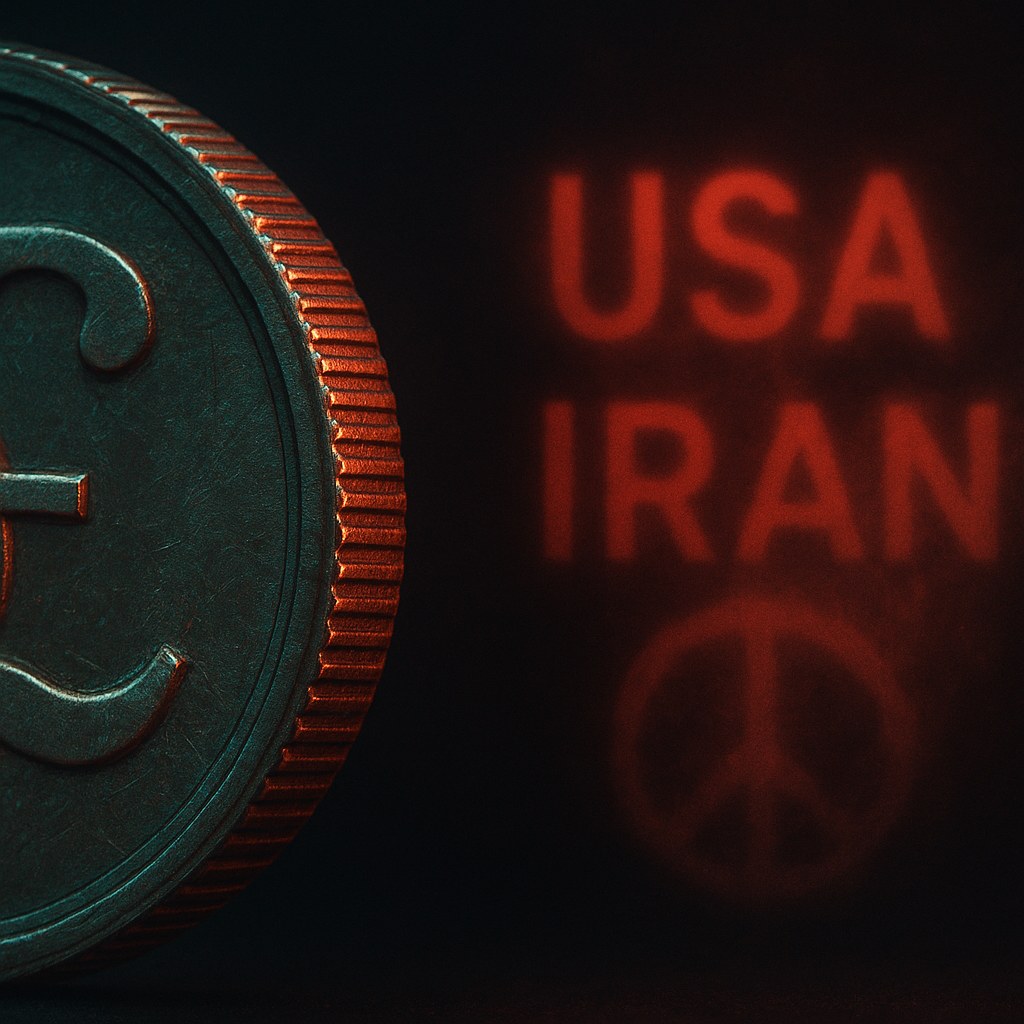
Sterling climbed after reports that talks between the United States and Iran have made meaningful progress, a development traders are interpreting as a lower near-term risk premium across risky assets. The primary market reaction — captured in headlines like “gbp rises on us-iran talks progress” — reflects the immediate sensitivity of FX markets to geopolitical uncertainty and to the prospect of lower oil-related inflationary pressure.
Today’s moves are less about a single macro surprise and more about risk re-pricing: a negotiated pause in escalation tends to reduce demand for safe-haven currencies and commodities. This article explains the substance behind the headlines, why the market moved, and what traders should watch next.
US-Iran Talks Progress: A Deep Dive into the 14-Point MOU
The centrepiece of the market response is a reported 14-point Memorandum of Understanding (MOU) between delegations. The MOU is structured as a sequencing document that schedules reciprocal steps on nuclear inspections, sanctions relief, and regional behaviour rather than offering an immediate, comprehensive settlement. Key elements reportedly include:
- Reaffirmation of enhanced inspection access for specified nuclear sites on a phased basis;
- A mechanism for conditional easing of targeted sanctions, tied to verifiable compliance benchmarks;
- Frames for limiting certain missile or enrichment-related activities for an agreed period;
- Commitments to pause proxy escalation in specified theatres as confidence-building measures.
Those details matter because they reduce tail-risk without resolving every dispute. For currency markets, the emphasis on verifiable steps and conditionality is important: traders prefer staged, reversible commitments over opaque, open-ended promises. The MOU also appears to bind both sides to a defined negotiation timeline and dispute resolution protocol, which helps to lower the probability of sudden, unilateral escalation that typically drives safe-haven flows.
Historical Context: US-Iran Diplomatic Relations and Previous Agreements
Understanding the MOU requires context. US–Iran relations have cycled between tentative diplomacy and confrontation for decades, from the original nuclear negotiations and the Joint Comprehensive Plan of Action to later withdrawals and renewed sanctions. Previous agreements showed that verification and clear timelines were crucial; when either was weak, accords unravelled. For background on the broader arc of negotiations and their market relevance, see our primer on US–Iran relations.
Past failures often followed misaligned expectations on sequencing — for example, whether sanctions relief comes before or after demonstrable programme rollbacks. The current MOU aims to avoid that binary by designing incremental conditionality, which reduces the chance of abrupt policy reversals that markets dislike.
De-Escalation Mechanism: Lebanon’s Strategic Role
One under-reported aspect of the talks is the formalised de-confliction channel that routes incidents in Lebanon through a dedicated liaison mechanism. Lebanon matters for two reasons: it is both a proximate flashpoint for regional proxy conflict and a symbolic testing ground for the wider de-escalation framework.
The mechanism establishes predefined communication lines between relevant actors, an incident verification process, and an arbitration timetable to prevent miscalculation. In practice, that means limited tactical engagements—previously capable of sparking broader spikes in risk aversion—may now be processed through diplomatic channels before traders and military planners extrapolate worst-case scenarios. The result is lower odds of sudden risk repricing that pushes currencies into safe-haven territory.
This kind of targeted de-confliction can be more stabilising than broad pledges because it addresses the operational tempo of conflict rather than high-level rhetoric.
Beyond GBP: Global Inflation and Oil Price Impacts
Markets priced in a meaningful fall in geopolitical risk, which translated quickly into a decline in oil risk premia. Lower crude risk premia typically reduce headline inflation pressure in importers and ease input-cost squeezes for energy-intensive producers worldwide. For currencies, that has two knock-on effects:
- Reduced inflation expectations can temper central bank hawkishness over the policy horizon, changing yield differentials that drive FX flows;
- Lower commodity-driven price pressure improves real-income outlooks in many economies, supporting risk assets and weakening safe-haven demand.
The net effect is not uniform. Commodity-exporting currencies can weaken while importers may gain. Importantly for sterling, the oil-channel works through both inflation and growth expectations: lower energy-driven inflation may relieve some immediate pressure on households and allow monetary policy to remain data-dependent rather than reactive to supply shocks.
Market Reaction: GBP/USD Exchange Rate Analysis
The immediate FX response saw GBP appreciate against USD as implied risk premia narrowed and dollar safe-haven demand receded. Traders cited reduced probability of oil-supply disruption and a calmer risk environment as the primary drivers. Short-term technical positioning — including long sterling exposure established during earlier risk-on windows — amplified the move.
On intraday charts, the move resembles a classic risk-on repricing: EUR and other cyclicals outperformed safe havens, while cross-asset flows favoured carry and beta exposures. For traders, the crucial questions are liquidity and persistence. If the MOU holds and verification follows, the appreciation may prove more than a technical bounce. If it falters, the dollar could reclaim lost ground quickly as volatility returns.
Traders looking for more structured ways to monitor evolving price action can track live exchange-rate charts and correlation shifts between oil, yields and FX; this cross-market lens often provides earlier signals of regime change than single-market indicators.
Political Stability in the UK: Implications for GBP
Geopolitics is only one part of the story for sterling. Domestic political stability, fiscal outlook and Bank of England policy expectations also drive medium-term sterling performance. A reduced external shock from the Middle East improves the UK’s external environment, but sterling remains sensitive to domestic developments such as growth momentum and fiscal signals.
In short, international de-escalation removes a substantial external headwind, but the GBP’s trajectory will still be shaped by UK-specific data and policy moves in the weeks ahead.
Expert Insights: The 60-Day Negotiation Timeline
The MOU reportedly sets a 60-day window for specific deliverables, a compressed timetable in diplomatic terms. Geopolitical analysts tend to view such timelines pragmatically: they can focus diplomatic energy and create political incentives for compliance, but they also risk collapse if verification mechanisms are under-resourced or if domestic politics interfere.
Most observed assessments emphasise conditional optimism: the 60-day horizon is credible only if third-party verification proceeds without substantial delays and if both sides have a clear domestic political pathway to accept incremental concessions. Market participants should watch confirmation of inspection access, early sanctions-roll-back signals or breakdowns in liaison channels as bellwethers for whether the timeline will be meaningful.
STB’s Perspective: Navigating Geopolitical Risks with PAMM Accounts
Geopolitical events highlight the value of diversified exposure and active risk management. STB Investment’s PAMM framework provides a managed-allocation model that some traders use to access professionally run strategies while retaining account-level transparency. Remember that leveraged products amplify both gains and losses; CFDs and similar instruments carry significant risk and are not suitable for all investors.
If geopolitical volatility is part of your risk calculus, consider how managed allocations sit within your broader portfolio rather than as a speculative overlay.
Frequently Asked Questions
Why is the GBP rising on US-Iran talks progress today?
The GBP is rising because reports of progress reduce global risk premia and lower demand for safe-haven assets like USD. Reduced geopolitical risk typically eases oil risk premia and inflation concerns, supporting sterling through improved risk sentiment and adjusted expectations for central bank policy paths.
How does the GBP rise affect the UK economy?
A stronger pound lowers import costs and can ease headline inflation, benefiting consumers and firms that rely on imported goods. However, a persistent appreciation may weigh on export competitiveness. The net effect depends on the balance between improved household real incomes and potential pressure on export-led sectors.
What are the latest GBP/USD exchange rate changes due to US-Iran talks?
Markets moved sterling higher as traders repriced geopolitical risk, with GBP/USD reflecting a classic risk-on adjustment. The exact intraday move depends on liquidity and positioning; watch live FX charts and cross-asset correlations for real-time confirmation of direction and strength.
What is the Memorandum of Understanding (MOU) and how does it impact the GBP?
The MOU is a staged agreement outlining verification steps, conditional sanctions relief and de-escalation protocols. By lowering tail-risk and clarifying a negotiation timeline, it reduces uncertainty-driven demand for safe-haven currencies, which can support sterling in the short term.
How does the de-confliction mechanism involving Lebanon affect the GBP?
De-confliction in Lebanon reduces the risk of rapid regional escalation by providing a formal channel for incident resolution. This lowers the chances of sudden spikes in risk aversion and oil-risk premia, indirectly supporting the pound by easing global uncertainty that often benefits the dollar.
Conclusion
The market’s reaction to reported progress in US–Iran talks — encapsulated in the phrase “gbp rises on us-iran talks progress” — is a reminder that geopolitics can shift FX flows quickly when it changes perceived tail risk. The 14-point MOU and associated de-confliction measures reduce immediate risk, but the persistence of sterling’s gains will depend on verification, oil-price dynamics and UK domestic developments.
For traders and investors, the episode underlines the value of diversified allocations and disciplined risk management. STB Investment’s PAMM framework offers a managed allocation approach that some clients use when seeking exposure that accounts for geopolitical volatility; remember that leveraged instruments carry significant risk and require careful sizing within any portfolio.
آماده شروع معامله هستید؟
آنچه آموختید را در عمل پیاده کنید.